
An Interview with Shellie Goldstein on Cosmetic Facial Acupuncture

- How did you become such an authority in the area of cosmetology and facial rejuvenation in Eastern Medicine?
Shellie: I’ve always been interested in skincare, beauty, and health. When I graduated in 1991 in New York, I had to wait one year to become officially licensed because the State of New York put a hold on licensing acupuncturists for that year. During that time, I went to China and worked in a hospital facial paralysis unit. I was in my early 30s at the time. Upon returning to New York, I opened my clinic. From the beginning, patients would ask me to treat the wrinkles in their faces while also treating them for other concerns. Since I also had a background in aesthetics education along with a master’s in Biological Science, I decided to bring all of my education and experience together and specialize in aesthetics and disorders of the head, neck, and face.
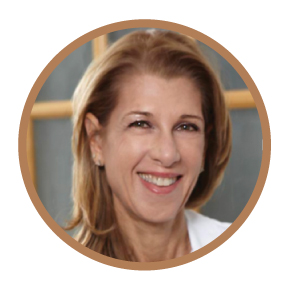 worked in a hospital facial paralysis unit. I was in my early 30s at the time. Upon returning to New York, I opened my clinic. From the beginning, patients would ask me to treat the wrinkles in their faces while also treating them for other concerns. Since I also had a background in aesthetics education along with a master’s in Biological Science, I decided to bring all of my education and experience together and specialize in aesthetics and disorders of the head, neck, and face.
When I opened my practice in 1993 in New York, I began to see many actors and models who were on camera and needed to make facial expressions and clients with unable to get neurotoxins and volumizers. My practice took off, and in 2019 I decided to open a second practice in Florida. However, by the time I was ready to launch, it was 2020—the time of COVID—so I chose not to move forward with that plan and instead started teaching.
My first major presentation was in 2020 at the Pacific College Symposium on facial rejuvenation. After that presentation, I partnered with Pacific College to offer the FACE program, which became available in 2022. I am currently the Director of the Facial Applications of Cosmetic Enhancement (FACE) Program offered at Pacific College of Health and Science.
Sherri: Wow! What an impressive background of education and experience to build such specialized training within the scope of Eastern Medicine.
- Besides facial acupuncture, what other modalities do you use for facial rejuvenation?
Shellie: I use microneedling, gua sha, cupping, microcurrent therapy, and LED light therapy.
Microneedling is a separate treatment and is not used on the same day as other facial rejuvenation modalities because it intentionally traumatizes the skin to stimulate repair. It involves puncturing the face with very fine needles to naturally increase healthy collagen and elastin production. A handheld roller with fine needles is used on the face, reducing fine lines and wrinkles, improving skin tone, and enhancing the absorption of skincare products. This treatment can be done 4–5 days after a regular facial treatment, or as a series of 3–5 monthly sessions.
Cupping and gua sha stimulate circulation, improves lymphatic drainage, and stimulate fibroblast activity to enhance healthy collagen production. These therapies move qi and decrease inflammation. The face responds to pressure by creating a piezoelectric current, which is similar to the “de qi” sensation experienced with acupuncture needling. The piezo effect influences collagen in skin tissue and brings hydration to the skin.
Gua sha involves using a tool made from various stones to massage the face in short, swift or long, gliding strokes. Each stone has different properties—for example, jade is very cooling and used for irritated skin, while rose quartz may be better for dry or dehydrated skin. Cupping uses very small cone-shaped suction cups that also slide along the face.
Microcurrent therapy uses a gentle current—approximately 100,000 times weaker than regular electrical stimulation—to lift and tone facial muscles.
LED (low-level light therapy) uses light-emitting diodes to address skin issues. LED light increases fibroblast activity, supports collagen and elastin production, improves circulation and lymphatic flow, and stimulates healthy cell production.
- Can you explain more about what the Piezo Effect is?
Shellie: Collagen is the primary component of connective tissue, and fascia has mechanical and electrical properties that interact with other tissue components—especially when stimulated by needling or pressure, such as gua sha, cupping, or acupressure. - Can you give an example of the kinds of questions you ask on an intake form for patients interested in cosmetology?
Shellie: I do a general intake like we would for any acupuncture patient, and I also do facial mapping to help diagnose, treat, and monitor changes with treatment. I take before-and-after pictures as well. - Can you give us an example of a case history that you treated from start to finish?
Shellie: I start with the regular intake process: I look at the patient’s tongue, take their pulse, then do facial mapping and take pictures before and after. I discuss the patient’s goals and expectations, establish healthy but firm boundaries, and outline a treatment plan.
For example, if a patient is qi- and blood-deficient, I may recommend regular acupuncture treatments first to build qi and blood before doing facial rejuvenation. If a patient has Spleen Qi deficiency with dampness, I may ask them come for constitutional treatment and do gua sha treatment at home before beginning facial treatments. If someone has had Botox or fillers, I suggest waiting two weeks before treating the face. I also have different protocols for people with autoimmune or bleeding disorders.
In any instance, you want to manage the patient’s expectations and treat the self-esteem and spirit of the person, along with the physical, mental, and emotional components. Educating your patient along the way about the various modalities and outcomes is crucial for building rapport and setting expectations.
Begin treatment by treating the body first, then the face, and add ancillary services as needed, such as gua sha, cupping, microcurrent therapy, or low-level light therapy. Generally, I prescribe weekly treatments for 10–12 weeks. If patients are older, I may prescribe 14–16 weekly treatments. I adjust my protocol depending on how well the skin and body responds; age is not the only factor that can slow response. Always treat the underlying disharmony along with specific facial points.
- Are there patients for whom you would not recommend facial rejuvenation treatments?
Shellie: Yes—people with extreme yin or yang deficiency, some autoimmune conditions, cancer, recent surgery, or those who have recently had fillers or neurotoxins such as Botox. You can do facial acupuncture two weeks after neurotoxins or volumizers. Use caution with pregnant patients. - Do you have any skincare recommendations that you prescribe to patients?
Shellie: For skin conditions such as rosacea, acne, or other dermatoses, I recommend calming facial products. For dry skin, I recommend more hydrating products. For hyperpigmentation, I suggest products containing vitamin C. For patients with blood stagnation, I often recommend products with safflower oil. - Do you treat vitiligo at all?
Shellie: This is a hard condition to treat because there is no melanin in the affected area of the skin. Since it is also an autoimmune condition, I focus more on supporting the autoimmune aspect rather than treating the skin directly. - What type of needles do you use for the face?
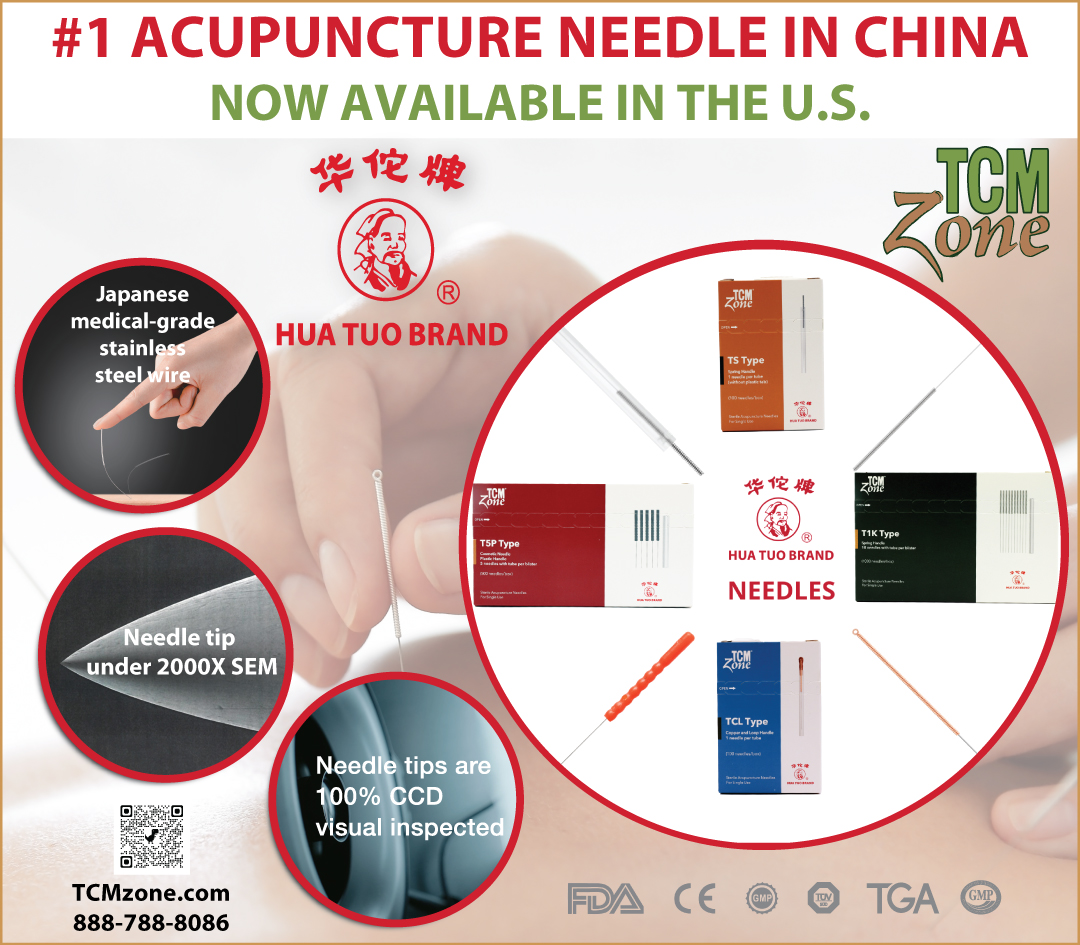
Shellie: I like Seirin® J-type needles for facial acupuncture. TCMzone has a new line of more affordable needles that are equally as effective, Hua Tuo Brand® needles, China’s #1 in acupuncture. They have a special cosmetic needle line with many choices of sizes. - The lymphatic system plays a major role in skin health. Is there a specific facial oil you like to use for lymphatic treatment?
Shellie: Yes, I use Dr. Li’s Ying Herbal lymphatic oil. I have patients clean their face before coming in and then apply products as needed during treatment. - Is there any advice you would like to give to someone interested in practicing facial rejuvenation?
Shellie: If you’re interested in studying facial rejuvenation to add this specialty to your clinical practice, check out the FACE program at Pacific College. If you want to develop your own facial rejuvenation routine without fillers or plastic surgery, check out Touch and Glow: The Do-It-Yourself Acupressure Face Lift Kit. I also wrote a book called Your Best Face Now: Look Younger in 20 Days with the Do-It-Yourself Acupressure Face Lift if you’d like more information.
Sherri: Thank you so much for taking the time to give us a glimpse into the specialized area of cosmetology and facial rejuvenation.
Shellie: Thank you.