
Inside the Legacy of China’s TCM Grand Master Prof. Minru Liu: An Interview with Maryland Acupuncturist Dr. Daohe Fang

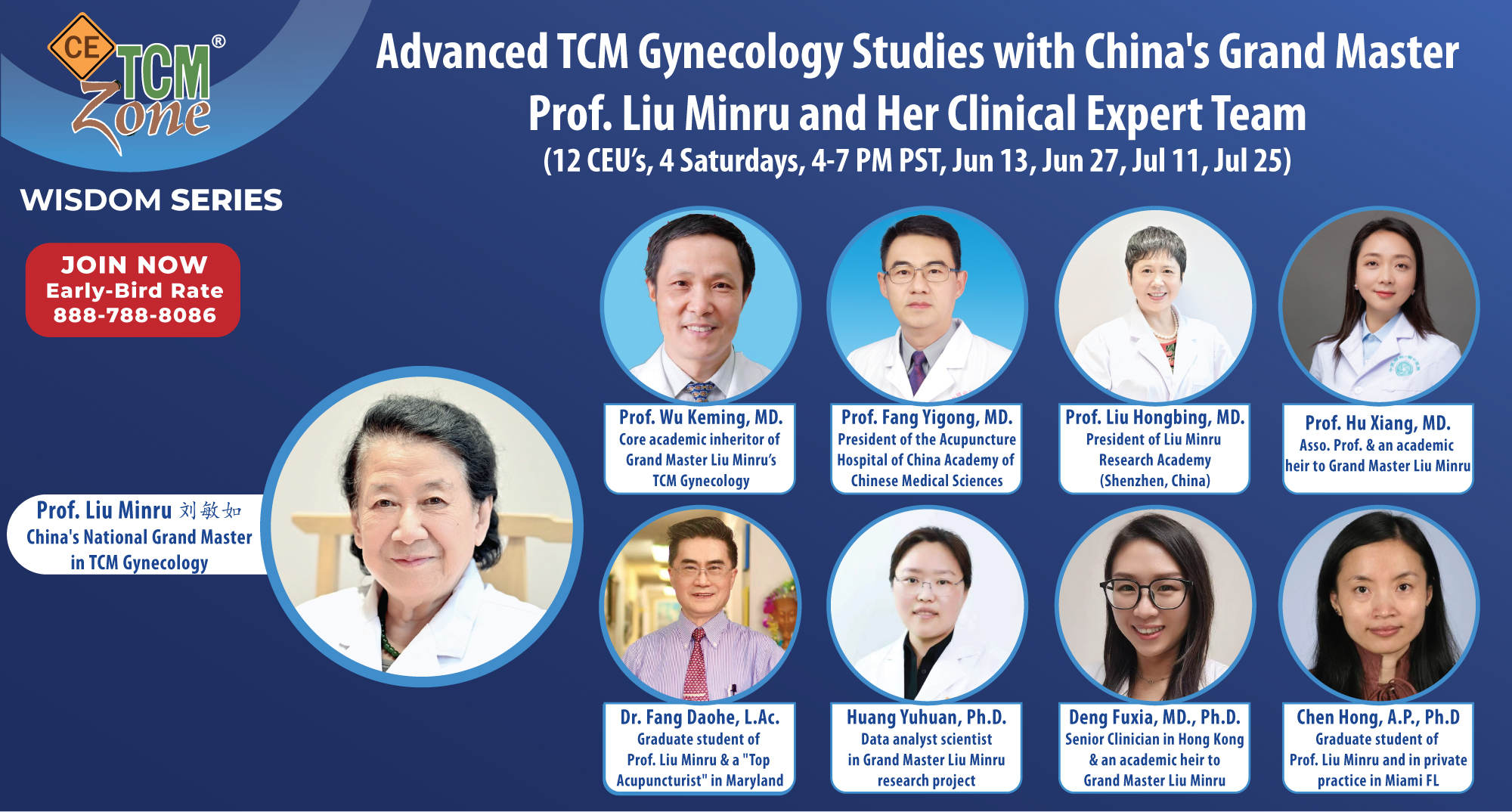
For the second series of our upcoming Wisdom Series 2 between July 13 to July 25 (every other Saturday), we will be featuring Grand Master of TCM Gynecology, Prof. Minru Liu. Prof. Liu and her clinical team will be presenting various aspects of Gynecology in both Eastern and Western medicine. As a precursor to this series, we had the opportunity to speak with Dr. Daohe Fang, L.Ac. from Maryland, one of Prof. Liu’s apprentices and here is what he had to say.
Sherri: Dr. Fang, thank you so much for taking the time out of your busy schedule to speak with us today.
Dr. Fang: Thank you, it is my pleasure.
Sherri: 1. I read that Prof. Minru Liu is the first woman elected to be inducted into an elite group of practitioners known as National Grand Master, which I understand is quite the accomplishment. Can you speak more about how she came to earn this title and what it was like for you as a student to have the opportunity to study and learn from her?
Dr. Fang– Prof. Minru Liu is currently 94 years old and was selected into the National Grand Master’s Group in China approximately 15 years ago. She is the first female to be inducted into this elite group based on years of clinical experience, research, and teaching in the field of Gynecology. Prof. Minru Liu practiced clinically and taught for 60-70 years at the Chengdu Traditional Chinese Medicine University and affiliated hospital. With her vast knowledge and experience, she also published some of the textbooks used by students of the program as well as general medical books. Today, she is still organizing and presenting at conferences and providing webinars like the Wisdom Series with TCMzone. All of her accomplishments, taken together led to her nomination into the National Grand Master’s group and I chose to study under Prof. Minru Liu because of her integration of eastern and western medicine in the field of Gynecology. As a result, surgurical procedures in the field of gynecology was one of my specialties.
Sherri: 2. I know Prof. Minru Liu is well known in the field of gynecology; Did she have a “specialty” that patients would seek her out to treat specifically?
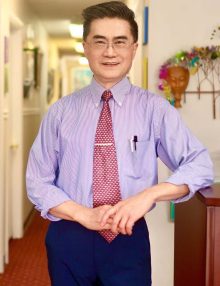 Dr. Fang– We were primarily in an inpatient hospital setting but would also see patients in outpatient within the hospital. Because Prof. Minru Liu was integrated, she was able to evaluate a patient in an outpatient setting and refer them to the inpatient hospital if needed for further evaluation and treatment.
Sherri: 3. Can you describe an example of a complex gynecological condition in modern times and how you approach treating it within the scope of Eastern Medicine? For example, perhaps a patient that is trying to conceive has endometriosis. How does Prof. Minru Liu address this kind of case?
Dr. Fang- Endometriosis is a good example of a complex condition we would see. For example, in an outpatient setting we came across a woman that presented with a benign chocolate cyst that was greater than 10cm. Standard protocol is if the cyst or tumor is greater than 5cm, we use surgery to remove the mass. If the mass is less than 5cm, we use herbs to slow down the growth process and shrink the cyst. In this case, the woman was scheduled for inpatient surgery in the hospital. With fertility patients there is a caution with surgery because we want to save the ovaries if at all possible but with a mass as big as 10cm, we would have to do surgery to remove it first.
Sherri 4. How has Prof. Minru Liu’s teachings help form your clinical practice?
Dr. Fang– I studied and worked under Prof. Minru Liu at Chengdu Traditional Chinese Medicine University and affiliated hospital for 10 years in the department of Gynecology. One of my main interests was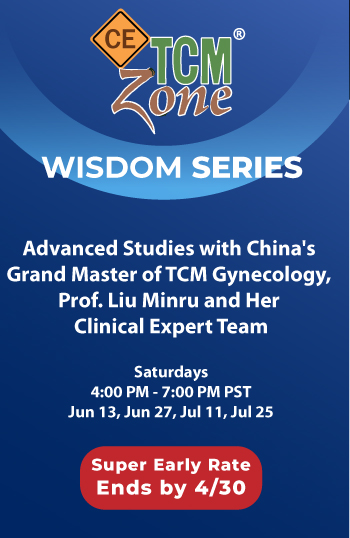 gynecological surgery and I also focused on fertility cases due to unknown reasons, recurrent miscarriage cases and menopausal cases. I’ve been practicing clinically in the U.S. for 33 years and was selected by Prof. Minru Liu to do research with menopausal women since this is not an easy condition to treat with Western Medicine. Often hormonal replacement therapy (HRT) is the western treatment for menopausal women and this has been shown through research to spike breast cancer rates. In Asian Medicine we tend to treat with a more natural approach than HRT.
Sherri 5. How does Prof. Minru Liu approach Menopausal cases in clinic?
Dr. Fang– There are 3 areas patients fall into when treating menopause with Eastern Medicine. First is yin deficiency, second is liver qi stagnation and the third is blood deficiency. Primarily, we treat these conditions with acupuncture and herbal medicine. Symptoms of menopause include night sweats, mood swings, insomnia, and body aches such as frozen shoulder, plantar fasciitis, and sciatica pain. The main formula used to treat menopause is Zhi Bai Di Huang Wan. Usually we combine Zhi Bai Di Huang Wan with another formula depending on the patient’s symptoms. For example, someone that is experiencing more night sweats, we will combine with Bai He Gu Jing Wan. For insomnia, we combine with Suan Zao Ren Tang. Women experiencing hot flashes and pain, combine with Qing Gu San Wan. For liver qi stagnation combine Zhi Bai Di Huang Wan with Xiao Yao San or Jia Wei Xiao Yao San. Women that have yin deficiency and liver qi stagnation presenting with uncontrollable crying combine with Yi Guan Jian plus Gan Mai Da Zao Tang. The stage of uncontrollable crying, severe depression, and not being able to eat is severe menopause.
Sherri 6. For fertility patients, does Prof. Minru Liu have a comprehensive program for women involving fertility care, prenatal and post-natal care? If so, can you elaborate on what that process entails?
Dr. Fang-Yes, we do follow a protocol for women going through fertility and pre and post- natal care. We provide 4 specific treatments for women undergoing the in-vitro fertilization (IVF) process. The first treatment is right before hormone therapy, the second treatment is right before retrieval, the third is a treatment prior to transfer and lastly there is one treatment immediately after transfer.
During pregnancy, acupuncture treatments are administered for the first 3 months or first trimester to treat symptoms such as morning sickness.
Post-natal care consists of acupuncture and herbs depending on the patient. One of the main formulas we give in post-natal care is Sheng Hua Tang to help with recovery and blood stagnation. Acupuncture is used but only with 2 or 3 points for a gentle treatment. During this time, we support the mother post-partum and help with irregular bleeding, sufficient milk production for breast feeding, baby blues and body pain.
Sherri 7. Besides herbal medicine and acupuncture are there other treatment modalities that Prof. Minru Liu incorporates like nutritional supplements, diet, red light therapy or something else?
Dr. Fang-Yes, diet and nutrition are a significant part of the treatment protocol. For example, the diet we recommend to menopausal patients is a diet high in animal protein, fiber, organic yam, organic soy bean and soy milk. In addition, cranberry, raspberry, and pure royal jelly also serve as natural hormone foods. Bee farmers will sell pure royal jelly, sometimes at farmers markets. Pure royal jelly is a good remedy for severe menopause and it is good for longevity and aging.
Sherri 8. Does Prof. Minru Liu incorporate moxibustion in her treatment protocols? If so, can you give some examples of when she would use this?
Dr. Fang-Yes, Prof. Minru Liu uses moxibusion for qi, yang and blood deficiency. It is contraindicated in yin deficiency heat.
Sherri 9. Does Prof. Minru Liu have a favorite formula that she likes to use for a specific gynecological condition?
Dr. Fang– Yes, Prof. Minru Liu often uses Xue Fu Zhu Yu Tang for blood stasis in endometriosis to help control bleeding after ovulation, days 14-28 of the menstrual cycle. Another variation of this formula is Shen Tong Zhu Yu Tang which is used for more pain with stasis. The first 14 days, I recommend Si Wu Tang or Fu Ke Yang Rong Wan.
Sherri 10. Did you see a lot of women for labor induction in her clinic? Can you share some of the treatment protocols that Prof. Minru Liu likes to incorporate for these women?
Dr. Fang-We used to see women with a breech presentation between 37-40 weeks and treat with acupuncture, moxibustion and herbal remedies. Currently, I no longer treat this in my clinic due to the liability.
Sherri: Thank you so much for spending your time chatting with me. It was a pleasure speaking with you.
Dr. Fang- Thank you.